Every neighborhood has one house that feels a little tilted. Not haunted. Just built on a strange kind of human chaos. In Magnolia Heights, that house sits catty-corner from mine. Before this newest fiasco started, that house belonged to a man we never called by his real name. He earned his nickname the honest way.
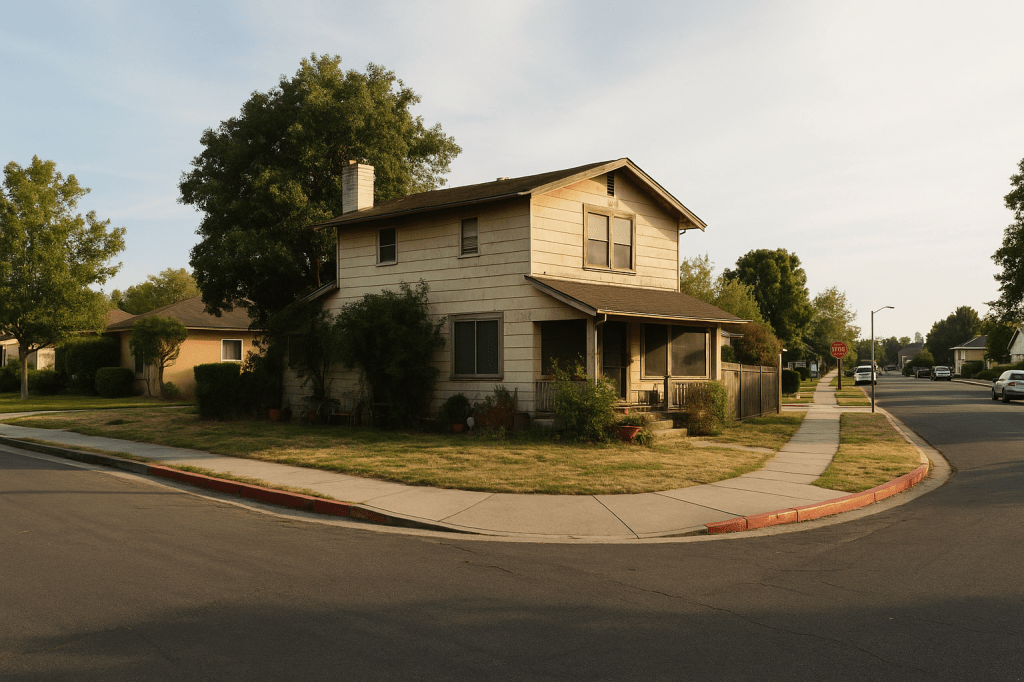
Curb-Check Charlie.
Charlie had a perfectly good driveway. A lovely, wide, gentle-sloped driveway anybody in California would die for. And Charlie looked right at that gift from the heavens and said, “No.” Instead, he turned it into a BBQ sanctuary no one asked for. A grill the size of a midlife crisis. Three dented coolers. Folding chairs that sagged like exhausted interns. An outdoor rug that made the fire department nervous.
Once he blocked off that driveway with his personal front-yard tailgate, he adopted the curb like it was a family heirloom. Same spot, same angle, same ritual, every single day. He guarded that curb with the devotion of someone who had never once been allowed to make any real decisions growing up. You could see it in the way he held himself. Charlie moved through the world like the kid who still wasn’t sure he was allowed to pick his own cereal.
So when life handed him one tiny rectangle of control, one sliver of painted concrete he could claim as his own, he clung to it like it was the only choice he had ever been granted.
Then one day, my husband had to park there. Not for drama. Not for rebellion. Just because the street was full and there was nowhere else to go. He parked, came inside, and thought nothing of it. Charlie came home, slammed to a stop right in the middle of the road, and stormed over like my husband had personally betrayed the entire curb lineage.
“You need to move,” he said. My husband looked at him, said one calm “No,” and walked inside. Charlie stood frozen. Not angry. Not yelling. Just cracked open in that quiet, heartbreaking way of someone who had finally met a boundary from the universe and did not know what to do with it.
The next morning, Charlie came outside with his own little can of red paint and painted the curb himself, like that was simply the next logical step in life. A man doing city work without the city knowing a thing about it.
Now, California cops do not have time to decide whether a red curb is official or not. They see red. They ticket red. End of story. So a couple days later, a cop rolled up and started writing him a ticket. He must have heard the rip of justice coming from the ticket pad, because as the cop was sliding the ticket under his windshield wiper, Charlie came running out of the house like he had been personally summoned by the universe.
[Picture 2: Charlie standing beside the red-painted curb he illegally painted himself, holding a small paint can, looking frustrated and confused while a cop nearby writes him a ticket.]
He tried to defend himself with, “But I painted it myself.”
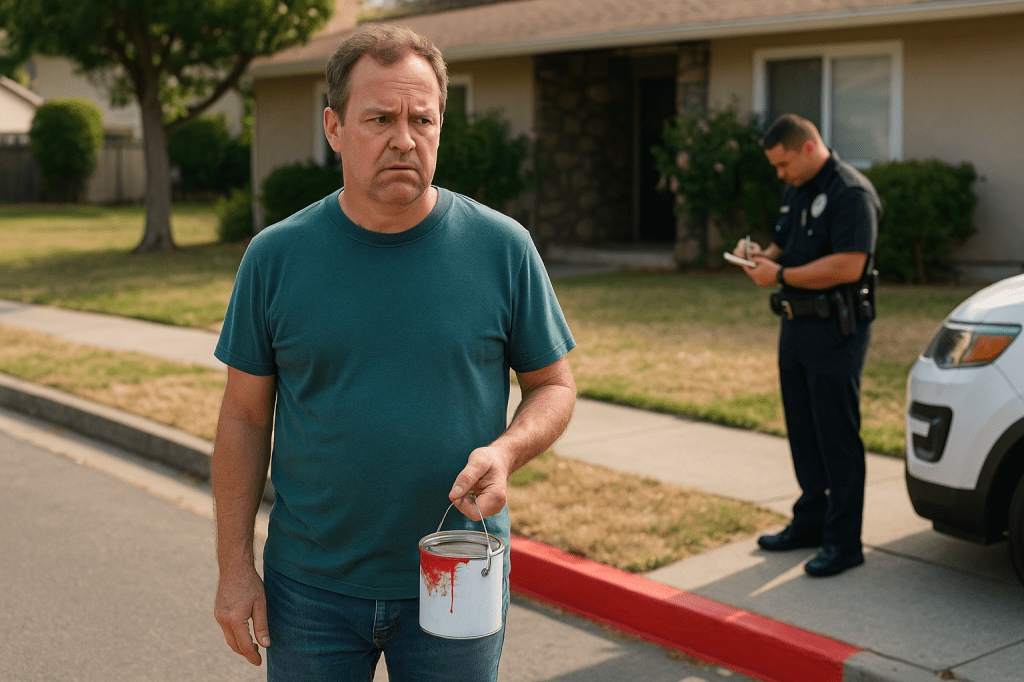
The cop looked at him with the face of a man who’d already been through three overtime shifts, two divorces, and at least one unsupervised PTA meeting. Exhaustion clung to his eyelids, anxiety twitched in his jaw, and he clearly did not have the emotional bandwidth for curb-related creativity. He told Charlie, “That is actually a bigger problem. It costs more if you paint it than if you park in it.”
And if karma has perfect comedic timing, it was that same evening when Charlie was outside scraping the red paint off the curb, trying to erase it like he was wiping away the bad memories of his childhood or something.
That was when my heart softened. Even I had to admit he was not a villain. He was just a man trying to control one tiny corner of the universe because life had never let him control anything else.
So I did what I always do when the neighborhood energy gets too spicy. I brought cupcakes. Because maybe he just needed a friend. Maybe kindness would soften that curb-shaped hole in his heart. He smiled politely, took the cupcakes, and for a brief moment, I thought I had patched something real.
Then his move-out day came.
And he parked a massive U-Haul in front of our house for three full days like a final, quiet middle finger written in orange rental paint. He could have parked it in front of his own home. He could have pulled it across his curb and used the long stretch in front of our place, since we easily fit two cars there. That would have made sense. But no. He parked the U-Haul directly in front of our house and walked every single piece of his belongings across the street to load it. Back and forth. Over and over. Like a man committed to inconvenience on a spiritual level.
No yelling. No speech. Just a three-day blockade of pure, unresolved energy. That was when I realized he did not want a friend. He wanted the cupcakes.
And when Charlie finally left, we thought the curse would leave with him. We truly believed that. But some curses cling. Some curses settle. And this one stayed right there in the drywall, waiting for whoever would move in next.
When Heather moved in, Mags and I were actually excited. We sat on my porch with my coffee steaming and Mags sniffing the wind like she sensed incoming chaos, both of us pretending not to watch the moving truck. Boxes went in. Furniture followed. We kept watching like two kids tracking the main character entering a new episode.
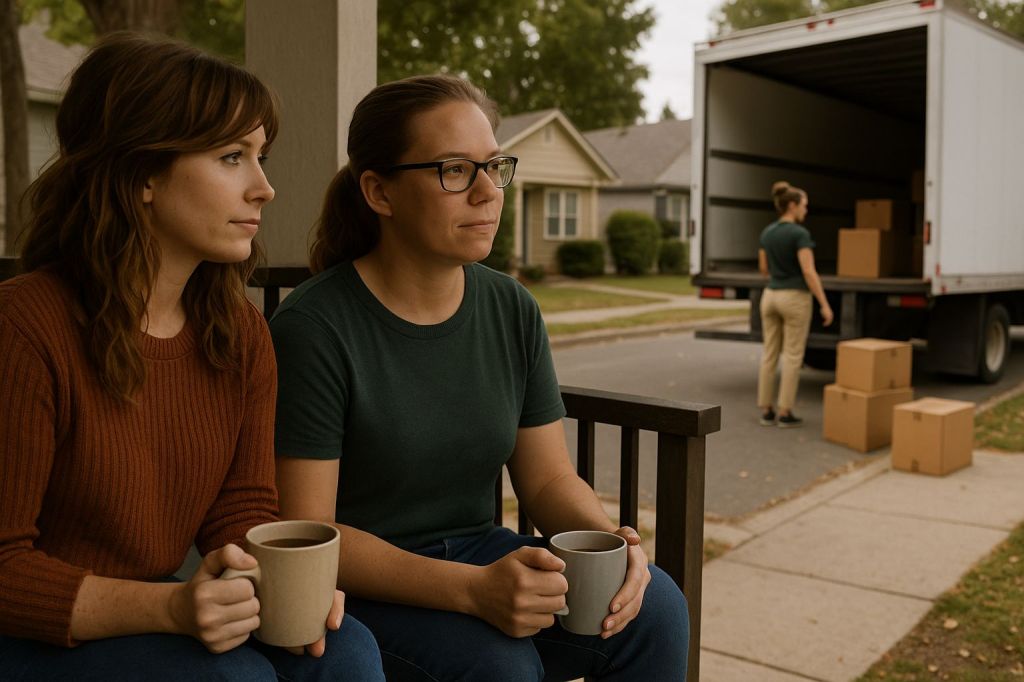
Then we saw her.
Heather stepped out with a brisk, purposeful stride women get when they have never once missed a return-policy deadline. Her hair was pulled back into a tight little power-bun that looked like it had its own opinions. Her sunglasses did not rest on her face so much as claim it. And the way she scanned the street made it look like she already saw the invisible checklist floating in front of her.
But her smile was bright and polite, so we waved. Heather waved back. And for a moment, we thought this was going to be great. Truly.
Heather even redid the BBQ area and made it beautiful. Fresh pavers, string lights, matching planters. It was the kind of before-and-after moment that makes you believe in second chances.
But then trash day came.
Trash day strips Magnolia Heights down to its bones. The entire street was packed. Cars wedged in like Tetris pieces. Delivery trucks blocking half the block. Contractors squeezing their vans into places that defied geometry.
And there was exactly one sliver of curb left: the one in front of Heather’s house. The problem was her trash can. It sat a little too far down, guarding the only remaining bit of asphalt like it was clocked in for a shift.
Mags pulled up in the late evening and saw the situation. She got out, rolled the trash can a soft few inches closer to where the driveway would’ve been, the plastic wheels giving a sleepy little clatter, and parked. Nothing dramatic. Nothing chaotic. Just the gentlest correction in neighborhood history.
The next morning, taped neatly to her windshield like a passive-aggressive parking citation, was a note from Heather. According to Heather, that space had been “saved for her husband.” Saved. As if the curb came with a reservation system only she knew about. And at the bottom, in tidy little handwriting: “Please do not park here again.”
That was the moment the air shifted.
Heather acting like that curb space came bundled with her property taxes didn’t sit well with Mags. She is not the type to be bossed around by a note, so she parked in front of Heather’s house a little more often. Not aggressively. Just enough to keep Heather’s emotional thermometer running warm.
One morning, I was on the porch enjoying my coffee while Mags and Manny chatted. The sun was barely up when Heather came marching toward Mags’s car with the wounded posture of a child discovering their bike stolen.
Mags did not flinch. She smiled, lifted her hand, and said, “Hi sunshine.”
Heather froze. Because nothing disarms a tantrum faster than being greeted like a beloved toddler.
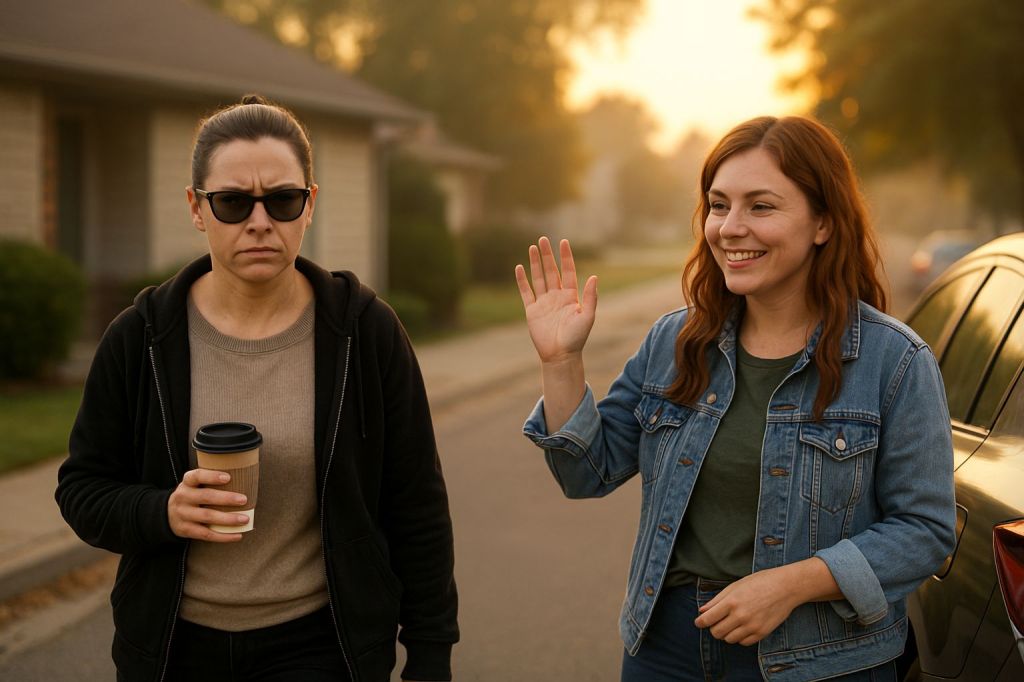
But something shifted after that morning. Whether Heather had a revelation, or her husband gently pulled her aside for a “we just moved here, please don’t start a war with the neighbors” talk, I will never know. All I do know is that the next week on trash day, things were different.
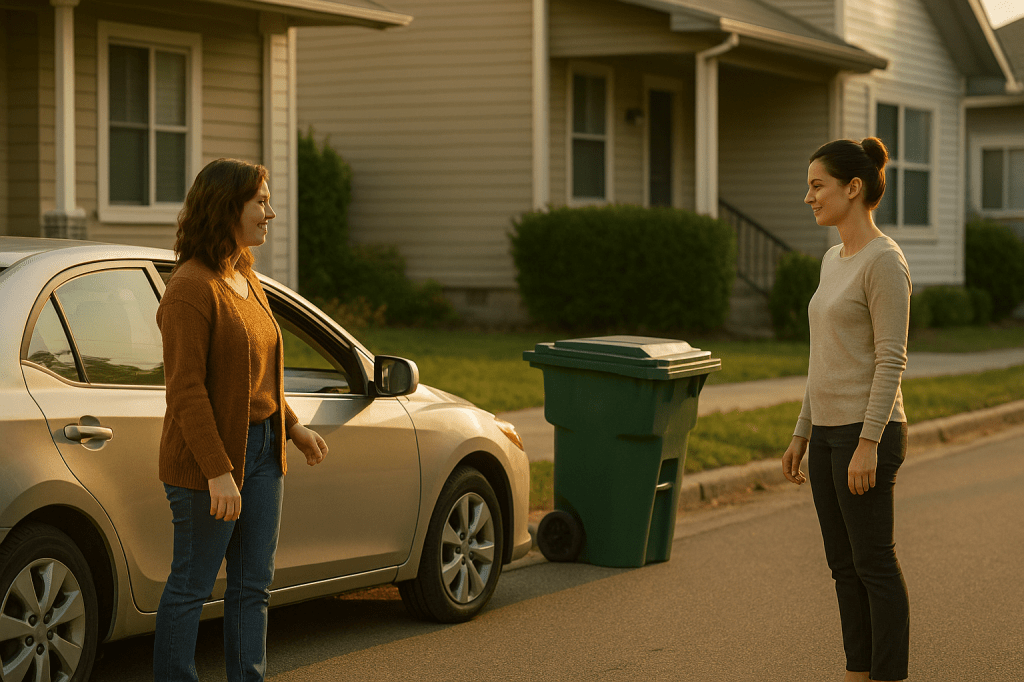
There was no space left in front of our house, so Mags had to park in front of Heather’s again. But this time, the trash can in front of Heather’s place was already pulled back neatly against the curb. Perfectly placed. Perfectly spaced. Completely reasonable. It looked like someone had finally decided to participate in civilized, trash-day society.
Mags slowed when she saw it. Blinked. The whole street felt like it held its breath. Then she parked without touching a thing. No nudging. No muttering. No quiet rebellion. She just parked like a normal neighbor.
Right as she stepped out of the car, Heather came outside holding a trash bag, heading toward the bin. She paused when she saw Mags, then looked at the can and said, “I didn’t realize how tight that space gets on trash day. I moved it up so you’d have room.”
It was not dramatic. It was not emotional. But it was real. A tiny, unexpected olive branch wrapped in morning sunlight.
Mags nodded.
Heather nodded.
And that was that. A calm breath in a neighborhood built on chaos.
From then on, Mags did not park there to make a point anymore. She only parked there when she needed to. And Heather stopped treating the curb like it came bundled with her mortgage paperwork. They were not best friends, but they were absolutely fine.
And in Magnolia Heights, fine counts as a miracle. Especially from a house that once hosted a full-blown curb curse.
Next time: The Dog-Sitter Incident — when a simple favor turns into a sunrise chase, a shaken Amazon driver, and a neighborhood that absolutely was not ready.

 Coffee With Caylin