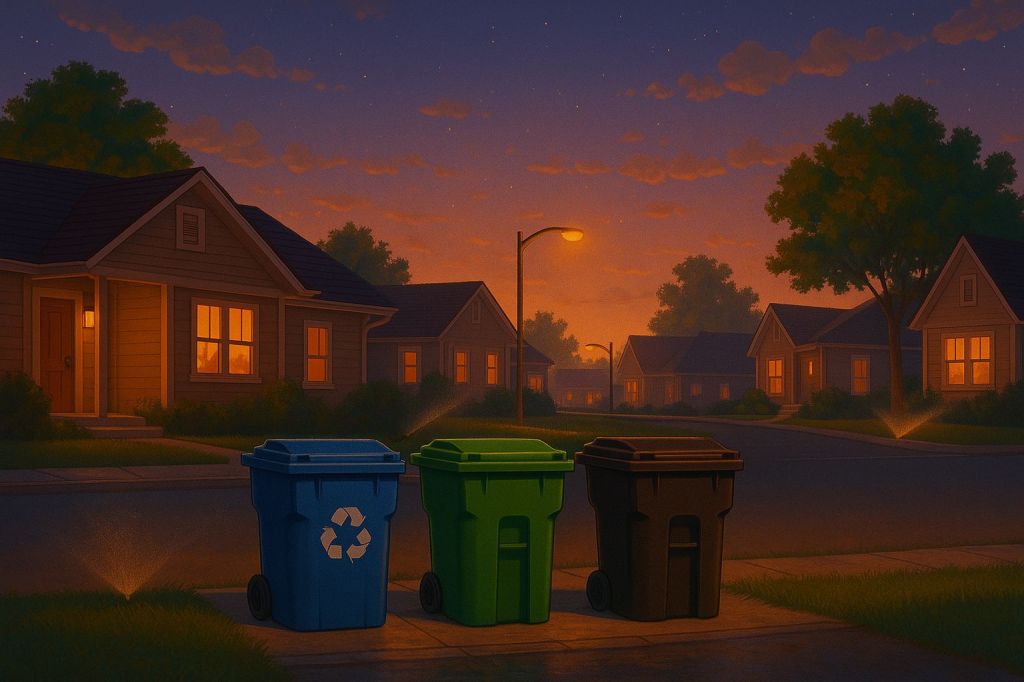
Every other Thursday night, Magnolia Heights clatters with purpose. That’s Recycling Week, when the blue bins join the green and black, and the whole street smells faintly of soap, citrus, and second chances instead of the usual avocado toast and financial regret.
You can hear the bins long before you see them: rubber wheels bumping curbs, plastic lids thudding shut, neighbors wrestling gravity down their driveways. It’s a small symphony of domestic duty, and most of us play our parts without thinking.
But a few months ago, the rhythm changed.
It started one Thursday around six in the evening, the time of day when dinner smells drift and sprinklers hiss against the last bit of sun. That was the first time we saw him, a man with a cart, quiet but quick, sorting bottles and cans like it was a practiced craft.
Most of us didn’t think much of it.
Until Ned saw him.
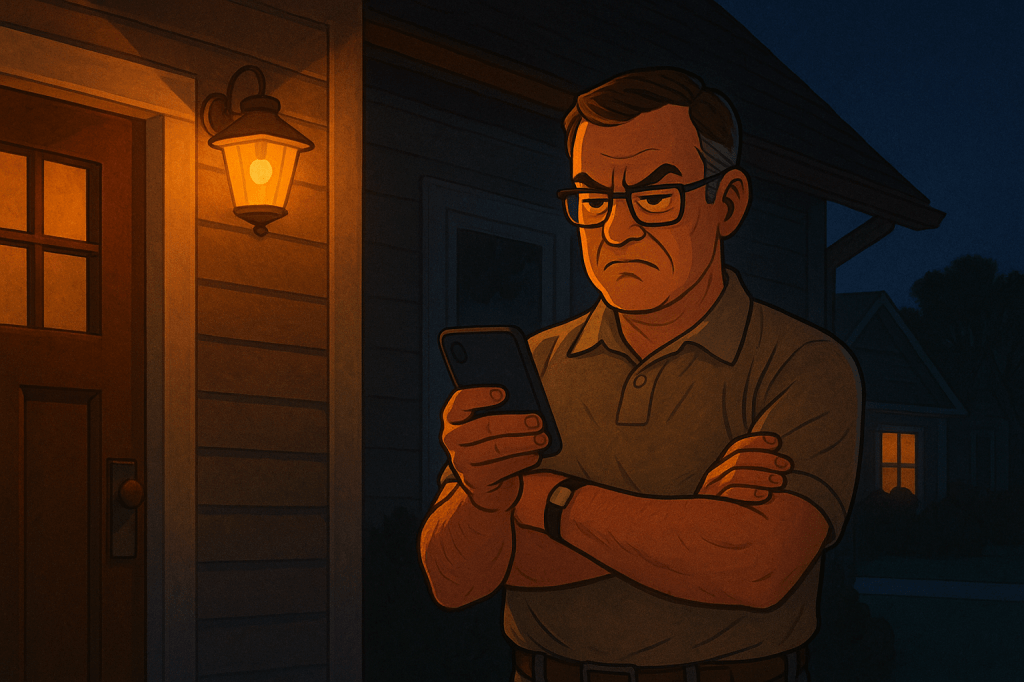
Ned was across the street adjusting his bins, because of course he was, when the man passed by, cart rattling, head down. You could almost hear the moral gears turning. Ned froze, hand still on the handle, jaw tightening like he was about to cite ordinance at sunset.
By nightfall, the post was up:
> Gentle reminder that rummaging is illegal and attracts wildlife 🙂
The smiley didn’t soften it.
I remember thinking, what made him believe the guy was scrolling Nextdoor between recycling routes? He probably doesn’t even know the app exists. The man’s looking for cans, not community drama.
By morning, the comment thread had become a full-blown block debate, sixty comments deep by breakfast. Mags, who never misses a moment for a good one-liner, chimed in mid-scroll, a blue Noss can in hand and a grin sharp enough to slice through the tension.
Manny quietly hit the heart button and said,
> As long as he closes the lids, I don’t see the harm.
Miss Chali added,
> He’s polite. Said hi when I told him good evening.
Then Admin Lisa slid in like she was diffusing a hostage situation:
> Let’s keep things neighborly, everyone. 🙂
Same smiley. Same tension.
By the end of the day, everyone knew about the “recycling guy.” Ned walked a little taller, like he’d personally defended property values, and the man with the cart, whoever he was, didn’t come back for a while.
Weeks went by, quiet again, until one night the sound of wheels returned. Not at dinnertime this time, but later, when porch lights dimmed and the street had settled into its usual hush.
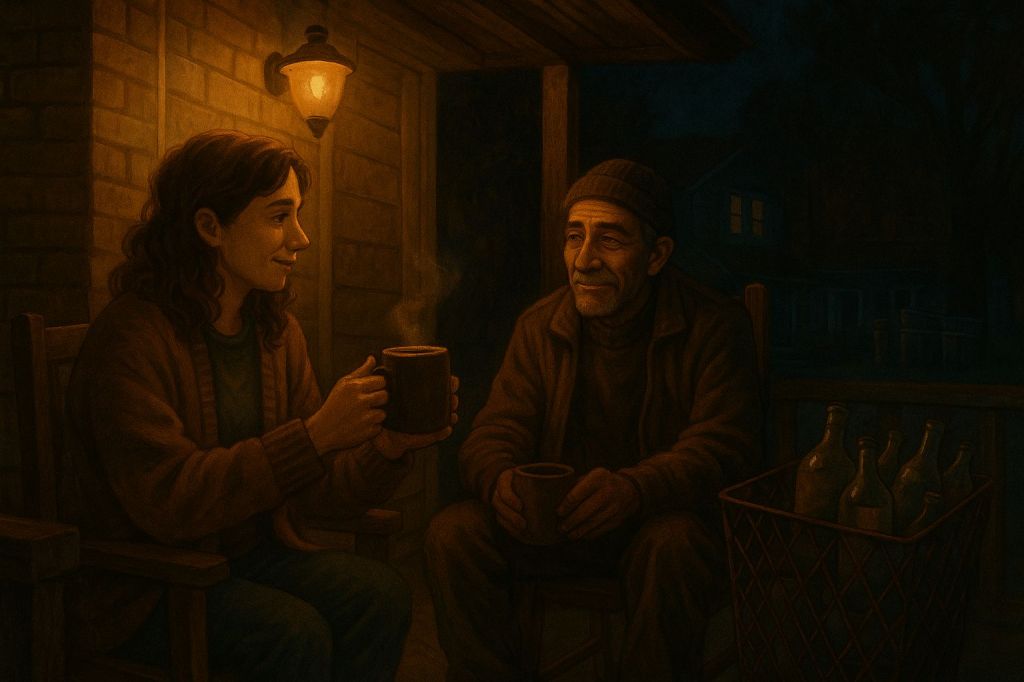
The beam of a flashlight cut across the pavement, catching the soft glint of bottles and the faint shimmer of aluminum. He worked faster now, not sneaky, just careful. And from my porch, coffee in hand, I watched him. Just a man collecting recyclables, same as before.
One night, I poured a second cup and held it out. He hesitated, then climbed halfway up the walk and took it.
“Thank you,” he said, like the words cost something.
I pointed to the chair across from me, the one that always stays empty. He looked at it for a second, then nodded and sat down. We didn’t talk right away, the kind of silence where both people are still deciding if it’s safe to be known.
“Quiet neighborhood,” he said.
“Mostly,” I told him. “Except when Ned finds a new rule to enforce.”
That got a real laugh out of him, low, warm, surprised. He took another sip, looked down the street like he was trying to remember it in a different decade.
“I used to live over on Hawthorn,” he said finally. “Two streets over, near that big oak they cut down when they built the first duplex around here.” He shook his head, still watching the street. “One of those sneaky ones that looks like a regular house from the front, but the lights tell on it.”
I didn’t know about the big oak. I’m assuming it was before my time, but the way he described it made it sound like something from the neighborhood’s old magic — the kind that lived in porch swings and late August air, in the sound of sprinklers and radios playing from open windows.
Back when neighbors stayed out until the sky turned violet, and you could tell who was home by the smell of dinner drifting down the block.
That kind of magic doesn’t vanish all at once. It lingers, tucked between the cracks in the sidewalk, waiting for someone like Rey to remember it out loud.
He smiled, but it didn’t quite reach his eyes.
“Stayed there a long time. Paid every bill. Then everything just started costing more. Insurance. Groceries. The kind of creeping math that squeezes you out slow.”
He said it like a man describing the weather, not complaining, just reporting the conditions.
He still calls this neighborhood home. His feet remember the cracks in the sidewalk, the mailboxes, the smell of Maizie’s lemon candles when the windows are open.
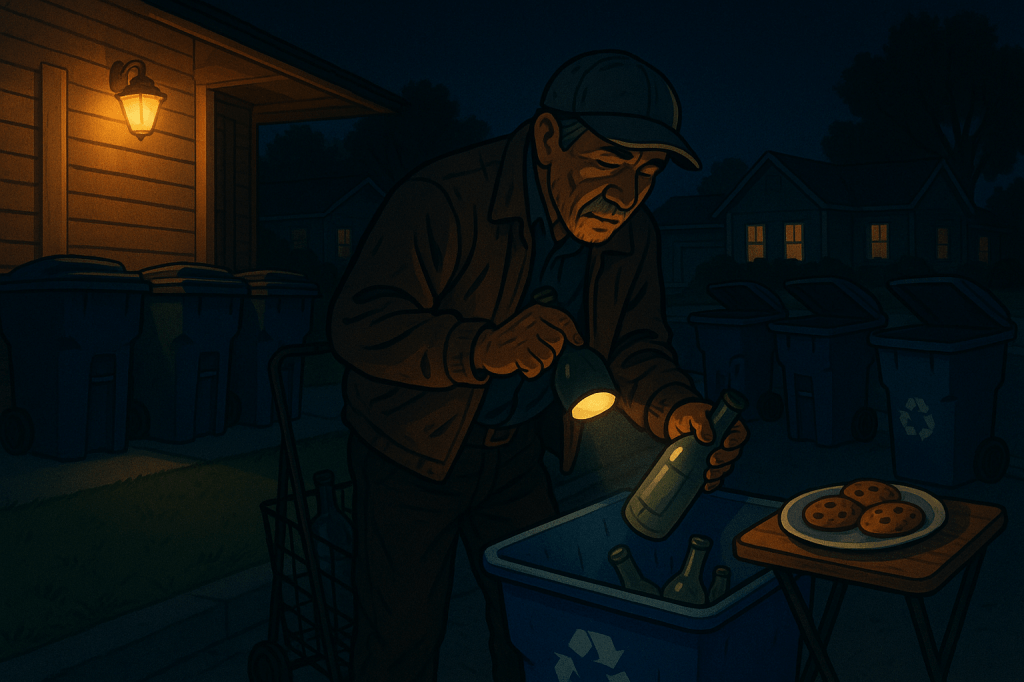
He doesn’t dig carelessly. He lines the bins back up straighter than we left them, wipes the rims with an old towel, and tucks everything back in place like it still matters. He moves like someone still proud of where he’s from.
I didn’t tell anyone. Not because it was a secret, but because sometimes quiet is the kindest language.
A few weeks later, Mags must’ve figured it out.
She walked by one morning, Pickle trotting a few steps ahead like he owned the block, and said, “He’s been coming later. Probably tired of Ned’s wildlife theories.”
I laughed.
She grinned.
“Tell him thanks for keeping the cans upright,” she said, and kept walking.
That Thursday evening, a few blue bins sat at the curb with their lids tilted open, on purpose.
Mags had a note taped to hers:
> Take care out there — watch for glass ❤️.
Manny started stacking his bottles neatly in a box beside the bin. The next morning, Miss Chali paused her sweeping to notice the bins lined in a perfect row, like someone had measured them with care. She didn’t say anything, just smiled to herself and kept sweeping, her broom moving like a quiet nod of approval.
And Ned?
He walked his dog past all of it, paused just long enough to read Mags’s note, and didn’t say a word. Not on Nextdoor. Not to anyone.
Later that evening, the faint whine of his leaf blower drifted down the street — not angry, just routine, like he needed to remind himself the rules still mattered to someone. He finished, looked once more at the bins, and went back inside.
When the street settled into that deep, easy quiet, Maizie stepped out with her small folding table. She set it beside the bins and placed a plate of cookies on top — not for the neighbors this time, but for the man who’d soon come walking with his cart.
A peace offering disguised as dessert, waiting under the faint glow of the warm porch light.
That’s how the Trash-Can Truce started — no meeting, no memo, no big conversation. Just a neighborhood deciding that kindness could be as simple as leaving a bin open for someone who still belongs here, even if the mail doesn’t say so anymore.
Some fights don’t need to be won. They just need to be understood.
Next time: The Parking Fiasco — when Mags meets the new neighbor, and the curb becomes the battleground no one saw coming.

 Coffee With Caylin