You know, it’s probably not fair that I’ve been out here gossiping about the neighborhood like the unofficial porch correspondent without ever actually introducing us. Before I start cataloging everyone else’s quirks, it’s only right I give you a peek at ours. Consider this the quick backstory on the chaos crew behind the curtain, the people who showed up with too many extension cords, not enough chill, and a deep emotional attachment to coffee.
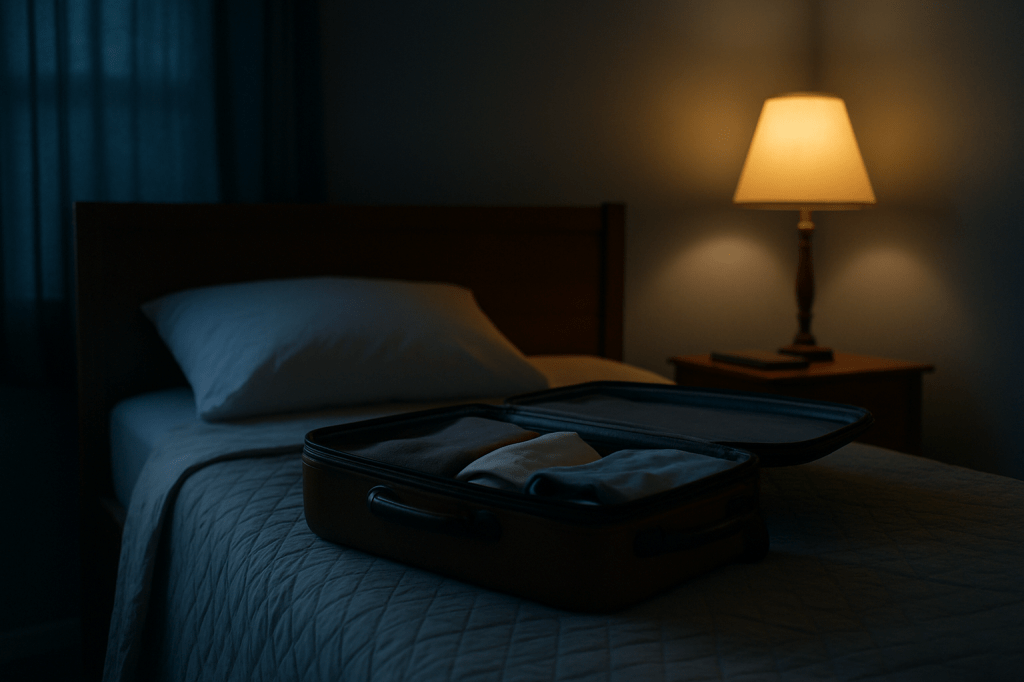
My husband came out first to set up the basics. He got the job, and the job came with a little granny flat on his boss’s property, one of those places that hadn’t been used in years and needed a bit of life breathed back into it. It wasn’t charmingly rustic; it was aggressively forgotten. The kind of flat that held onto the faint, combined scent of dust, regret, and the ghost of a thousand bad cleaning decisions. He spent his evenings scrubbing, fixing, hauling, and somehow turning that relic into something that felt like home.
But while he was building a new life, I was managing the slow-motion collapse of the old one. We’d been together for ten years at that time, and pulling us apart for three weeks was excruciating. Every day felt like an unscripted improv session because half my routine, my anchor, was gone.
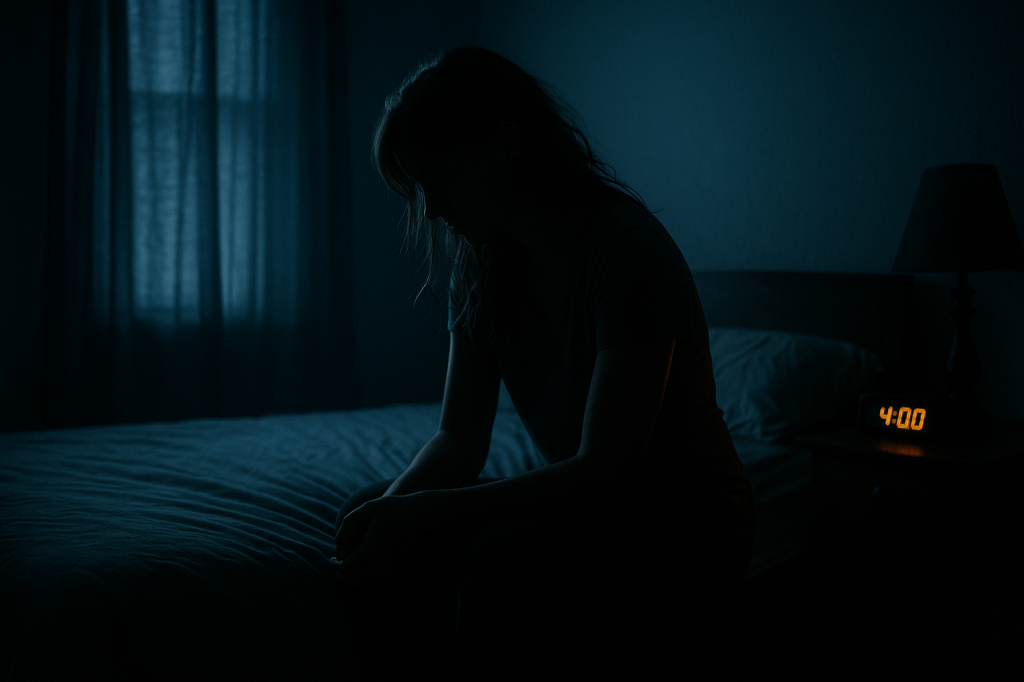
Now, add in the fact that I’m autistic and ADHD (AuDHD). At the time of the move, though, I didn’t know that yet. The disruption was physically agonizing. The absolute worst moment of the day was always 4:00 AM, the hour of pure, unfiltered quiet that gave my brain nothing to focus on but the chaos. All of this internal upheaval, the routine collapse, the sensory overload, the inability to process huge change, just felt like one giant, constant question: What is wrong with me, and how do I fix it?
The intricate façade of coping I built across my life collapsed, and the tightwire I was on snapped the moment we had to dismantle our family unit.
Leaving our kids, who were finally adults, to live on their own for the first time became its own quiet crisis. Every day I spent packing felt like an act of betrayal. We were moving, but I felt like I was abandoning them, tearing a hole in the ten-year routine we’d meticulously but chaotically built. I knew they were going to throw a party the minute I drove away, a party I wasn’t invited to because, obviously, who invites their mom to a party where they’re drinking cheap beer and probably making questionable life choices!
The fear and the overwhelm put me in a state of not knowing what to do. I was finally scheduled to follow him. I was about to embark on my solo drive to California and was, despite the dread, still genuinely excited for the new start. The best part, of course, came the day before I was supposed to pick up the rental car.
My husband, the same one who’d been working twelve-hour shifts so we could afford a place we actually liked, just showed up. He had driven all the way back to Texas just so I wouldn’t have to drive all by myself. He’d been running on fumes and paychecks because California has the sense of humor of a dirty mudflap, shiny from a distance, but mostly just bad decisions and missed opportunities up close. At just the right time of day, you can smell, faintly, avocado toast and financial regret.
No warning. No grand plan. Just a text: “Grab your purse. I’m outside.” Like that was a perfectly normal Thursday.
After three weeks apart, seeing him there filled me with so much love I didn’t know what to do with it. That kind of quiet kindness hits deeper than any grand gesture, especially when your brain is already running on the emotional equivalent of an empty fuel tank and a broken engine sputtering in the dark.
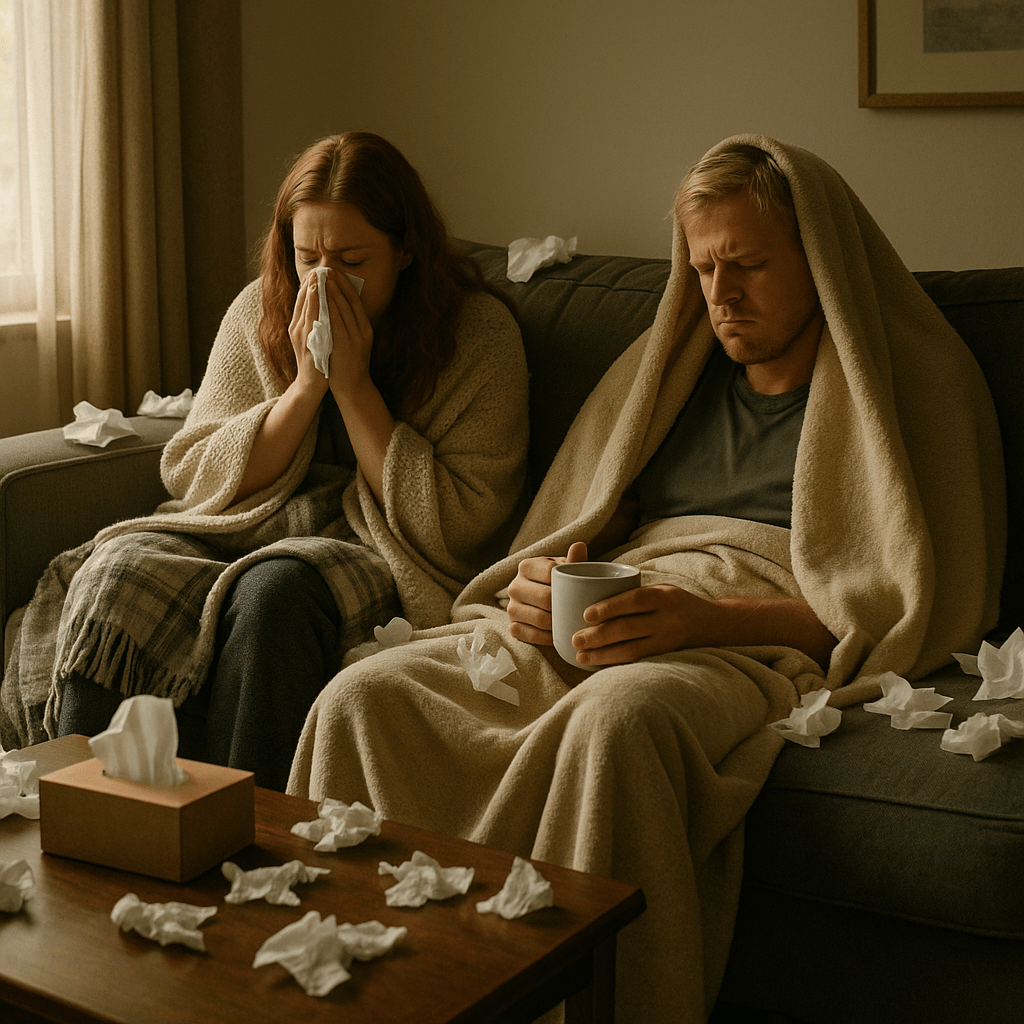
Three days after we got back, my husband got so sick I didn’t know whether to take him to the hospital, start designing “In Loving Memory” flyers, or Google funeral etiquette. And, because the universe needs a sequel, I got to play the latest viral game. It was the kind of sick that makes you start rewriting your will in your head just to pass the time. Spoiler alert, it was COVID. And for a while, all we could do was cough in unison and pray the Wi-Fi didn’t give out.
We moved into our current house while still weak, trading the aggressively forgotten granny flat for the fresh, terrifying potential of a new neighborhood. We were still so post-viral weak that for months, our default position was “slumped.” We’d shuffle around like geriatric zombies, sharing a collective memory loss about where we put the kettle. That’s what COVID leaves you with, just enough strength to live, but not enough to be useful.
When things finally started to lighten, the fear, the quiet, the endless scent of sanitizer, evenings began to bring the first signs of life again. A door opened down the street, laughter carried farther than it should, footsteps stopped hurrying away. Finally, our little corner of the world started unfolding before us, like a slow-motion movie after the credits finally roll.
Evenings filled with motion: big dogs dragging dads, tiny ones darting like fuzzy missiles. And in the middle of it all, Pickle. The unofficial pit bull of the block. He doesn’t have one home, but he belongs to everyone. Fed by one house, sheltered by another, loved by all. Watching him trot past feels like watching community happen in real time, no clipboard required.
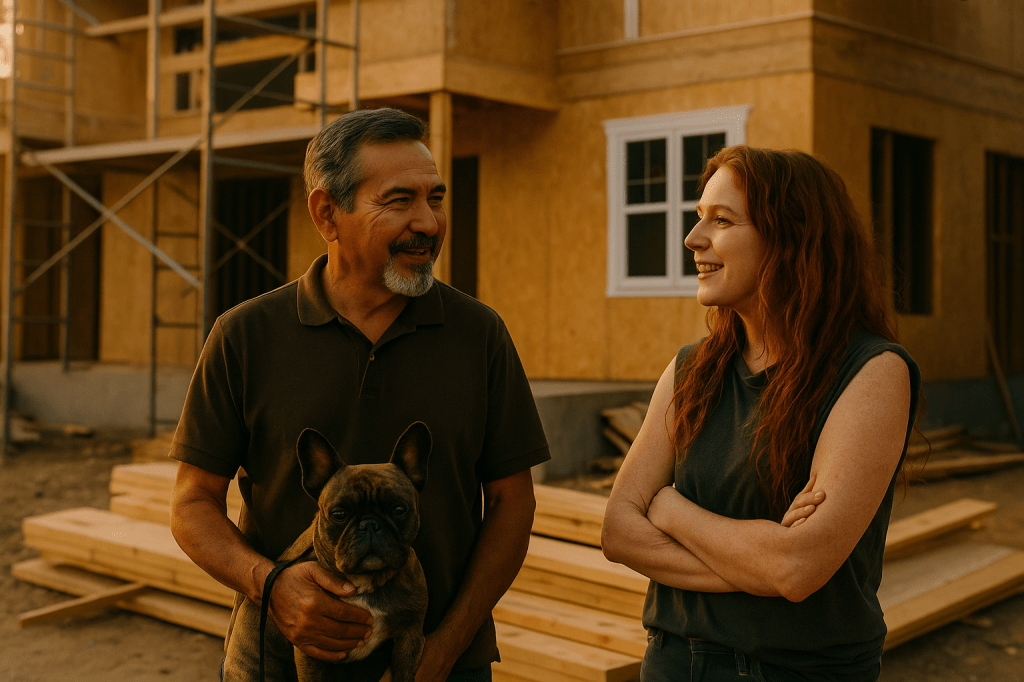
Around that time, I met Mags and Manny. Their presence was tied to the big, controversial construction project two doors down. What had been a single house, a bidder home, was slowly, loudly, and often infuriatingly, converted into a duplex: two doors, two new people. The newly divided space.
Manny is the kind of neighbor who reminds you what good people actually means, the sort who checks in on you just because you looked tired that morning. He’s the one who remembers trash day even when you don’t, who waves when you pull in, who asks about your husband’s cough a week after everyone else has forgotten. His little Frenchie, Moxie, is his opposite in every possible way, eight pounds of drama wrapped in fur. She’s got a bark that could power the grid and a personality that walks into every room like she’s auditioning for a crime show. I swear she could arrest you just for fun, then lick your face as an apology.
Mags, Manny’s tenant, is cut from my kind of cloth. She’s got the kind of humor that could start a bar fight and end it before anyone spills their drink. Rough edges, big heart, wicked sense of timing. She’ll call you out and call you sweetheart in the same breath, and somehow both feel like compliments. There’s a strength in her that looks familiar, the kind you earn from surviving things you don’t talk about anymore. You can tell she’s fought her way through life with a grin, a few scars, and a don’t-mess-with-me kind of grace. She’s the kind of woman you’d want in your corner, or at least on your trivia team.
And then there’s Miss Chali down the way, pronounced Chaw-lee, a detail we are still working to convince the mail person of. She’s the one who came to tell us our water line had busted, thank God. Otherwise I probably would’ve thought we’d been blessed with a self-watering lawn. She’s tiny, maybe four-foot-nothing, always sweeping, always moving, her little blue car buzzing through the neighborhood like it’s part of her. She’s sweet and precise, the kind of person who notices when your porch light burns out and reminds you before you even realize it. A woman who’s fought chaos her whole life with a broom and a plan. I adore her for it.
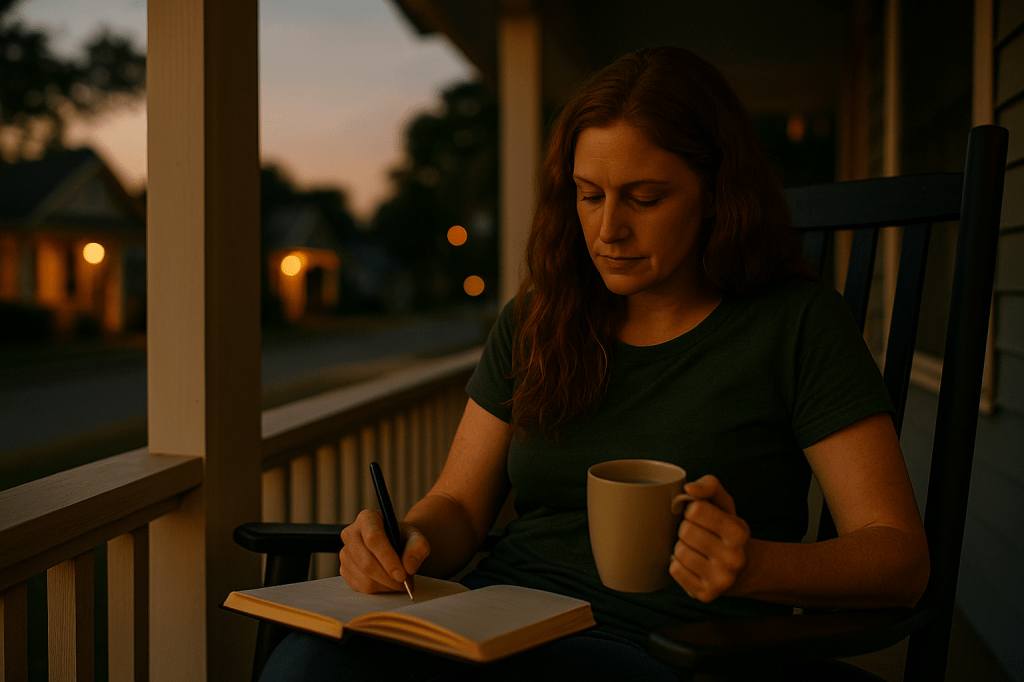
Most days, you’ll find me on the porch with coffee in hand and my notebook open, letting the day wander past. The porch became my quiet translator, turning all that neighborhood noise into meaning.
Being late-diagnosed with ADHD and autism taught me to observe first and speak later. The world isn’t always built for the way we notice things. So I write. One moment, one page, one neighbor at a time.
Life didn’t get simpler. I just learned to hear the music beneath it. The neighborhood helps with that.
Every month we collect for the local food bank. Once a year, we throw a block party, food stands, music, laughter, the annual reminder that we really do like each other, most of the time. Maizie’s lights blink on at dusk, Marco’s yellow car glides past with its movie-star shine, and Moxie barks at her reflection like she’s auditioning again.
All that ordinary noise feels like belonging. Not perfect. Never that. But real.
Maybe belonging doesn’t arrive with a grand welcome. Maybe it’s a slow song you learn right here, one cup of coffee, one story at a time.
Anyway, that’s the view from my porch, caffeine, chaos, and a little accidental wisdom.
Next time: The Trash-Can Truce — a tale of petty notes, leaf blowers, and the diplomacy of baked goods.

 Coffee With Caylin